
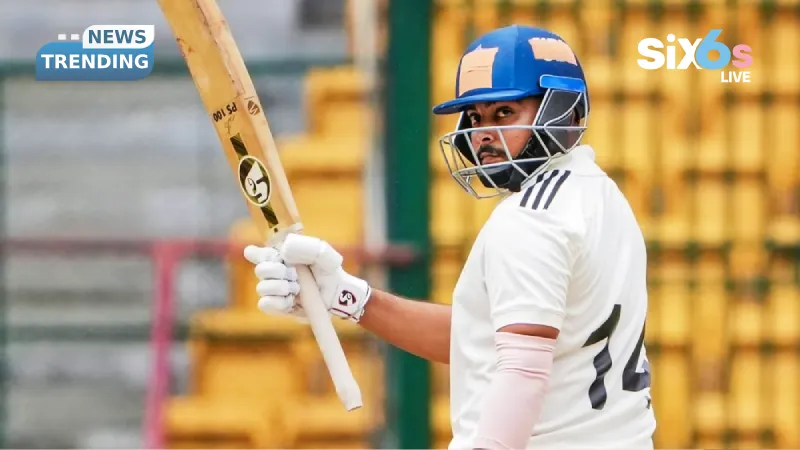
Domestic cricket has shown us some great finishes over the last week, along with some massive individual innings. One performance that stood out from all others was Prithvi Shaw‘s 222 off 156 balls for Maharashtra against Chandigarh. He is a huge hitter and at a strike rate of over 140, it was very much a statement of intent by Shaw and a clear reminder that the style of play which makes first-class cricket so exciting – aggressive and fearless batting – is still the heart of the game today. Some of the other games had predictable endings, like when Haryana easily beat Tripura, or when Jammu & Kashmir completed their innings victory.
Shaw’s Blitzkrieg Sets a Benchmark
Among recent domestic knockers (in terms of speed, precision & control), few have been able to execute as well as Shaw’s 222. As much as the total runs scored, this knock showed improved shot selection by being able to find gaps while maintaining a high strike rate. Such counter-attacking double hundreds historically swing the match, leaving opponents in disarray. With a large first innings lead for Maharashtra, this is now both statistically & psychologically difficult for Chandigarh to overcome, with their chasing requiring a great deal of extraordinary resilience.
Young Guns and Game-Changers
While Shaw dominated attention, the performances of others suggest that domestic cricket is becoming increasingly exciting due to the growing number of young players. In the match between Delhi and Himachal Pradesh, Yash Dhull scored 70 from 59 deliveries, helping Delhi gain a first-innings advantage over Himachal Pradesh. Similarly, Saransh Jain batted patiently for an unbeaten 103 to save Madhya Pradesh in their match against Saurashtra. Both performances represent a new trend among young players, where they are displaying both aggressive intent as well as responsibility in their batting – two important qualities needed for young cricketers to bridge the gap between domestic and international success.
Bowling Masterclasses Amid Predictable Wins
While bowlers were always ready to remind us of the skills that make first-class cricket an ongoing competition of tactics and technique, even on occasions it appeared as if there was some sort of pre-planned outcome (to say nothing of script), we saw two examples of how well-executed bowling can be. First, Auqib Nabi’s seven wickets for Jammu & Kashmir vs Rajasthan are a great example of how precise and effective bowling can be. Second, Parth Vats’ five wickets for Tripura to reduce them to just 47 off 25 overs in their second innings is another good example of how effectively you can bowl. Finally, the combined effort by all of the Mumbai players to get back into the match against Chhattisgarh to pick up six wickets and regain control shows the value of discipline in competitive play, even with rain and extremely large team totals disrupting your game plan.
Defiant Partnerships Against the Odds
Though not every contest was completely one-sided, Dega Nischal and Imliwati Lemtur’s 6th wicket partnership did cause some concern for Tamil Nadu’s bowlers and brought Nagaland back in the hunt. First-class cricket also includes partnerships and resiliency as well as individual brilliance, as demonstrated by the shrinking of what appeared to be insurmountable deficits to manageable margins.
Domestic Cricket has shown in this round of competition that some fundamentals of the game never change. Prithvi Shaw’s 300+ run performance is an example of how aggressive batting can turn a contest on its head. While performances such as those by Dhull, Jain, and Nischal have shown us that partnerships and patience continue to be essential for success.
Key Takeaway:
Shaw’s double century proves domination comes from audacious strokeplay backed by tactical awareness, not just big totals.
Stay updated on the latest cricket news and exciting updates at Six6slive. Dive into our in-depth articles and analyses to connect with the action today!